

REACH US
Our Offices: Our Head office in Pakistan Lahore,
and we also have Agents Worldwide
Pakistan, HQ: 216 E1, Wapda Town Lahore 54770
Pakistan
Karachi, Branch Office: 402, Queen’s center,
M.T. Khan Road, Karachi -74000, Pakistan
Email: info@albabaenterprises.com
Website: www.albabaenterprises.com

The Relevance of Gwadar port to Central Asia
The China Pakistan Economic Corridor offers a range of opportunities for the socio-economic development of landlocked Central Asian countries. Connecting to the Gwadar port of Pakistan, being developed under CPEC, the Central Asian states can maximize regional trade and connectivity. By utilizing Khorgos-Gowadar Axis, they would be able to carry out trade with South Asia, Middle East, Africa and the Pacific region. Hence, joining Gwadar would help them to achieve sustainable economic growth and regional connectivity.
Landlockedness is inherent economic limitation denoting lack of access to sea. It is a key challenge faced by the Central Asia Republics (CARs) of Kazakhstan, Kyrgyzstan, Tajikistan, Uzbekistan and Turkmenistan. Uzbekistan is, in fact, doubly landlocked for being with landlocked neighbors. Such countries bear high transportation and transit cost for not having admittance to sea ports and international shipping operations that involve cheaper trade.
Gowadar port of Pakistan links overland to Chinese city Kashgar in western province Xinjiang that borders with Kazakhstan, Kyrgyzstan and Tajikistan. Chinese cargo transportation from Kashgar to Gowadar port has already started.
CARs have been vulnerable to external shocks, as has been vividly evidenced in the 2014 oil crisis & economic slowdown and the prevailing COVID-19 pandemic accompanied by the historic rock bottom dip in oil prices. Countries with coastlines are less volatile and rapid at economic shock absorption, on account of economic diversification through regional connectivity.
The Relevance of Gwadar port to Central Asia
The China Pakistan Economic Corridor offers a range of opportunities for the socio-economic development of landlocked Central Asian countries. Connecting to the Gwadar port of Pakistan, being developed under CPEC, the Central Asian states can maximize regional trade and connectivity. By utilizing Khorgos-Gowadar Axis, they would be able to carry out trade with South Asia, Middle East, Africa and the Pacific region. Hence, joining Gwadar would help them to achieve sustainable economic growth and regional connectivity.
Landlockedness is inherent economic limitation denoting lack of access to sea. It is a key challenge faced by the Central Asia Republics (CARs) of Kazakhstan, Kyrgyzstan, Tajikistan, Uzbekistan and Turkmenistan. Uzbekistan is, in fact, doubly landlocked for being with landlocked neighbors. Such countries bear high transportation and transit cost for not having admittance to sea ports and international shipping operations that involve cheaper trade.
Gowadar port of Pakistan links overland to Chinese city Kashgar in western province Xinjiang that borders with Kazakhstan, Kyrgyzstan and Tajikistan. Chinese cargo transportation from Kashgar to Gowadar port has already started.
CARs have been vulnerable to external shocks, as has been vividly evidenced in the 2014 oil crisis & economic slowdown and the prevailing COVID-19 pandemic accompanied by the historic rock bottom dip in oil prices. Countries with coastlines are less volatile and rapid at economic shock absorption, on account of economic diversification through regional connectivity.
The Caspian Sea bordering Kazakhstan is itself landlocked and largely frozen. Ever since their independence in the 90s, Central Asian states have been aware of this structural challenge reflecting lack of access to sea, remoteness and isolation from world markets, despite having a strategic location at the crossroads of Europe and Asia.
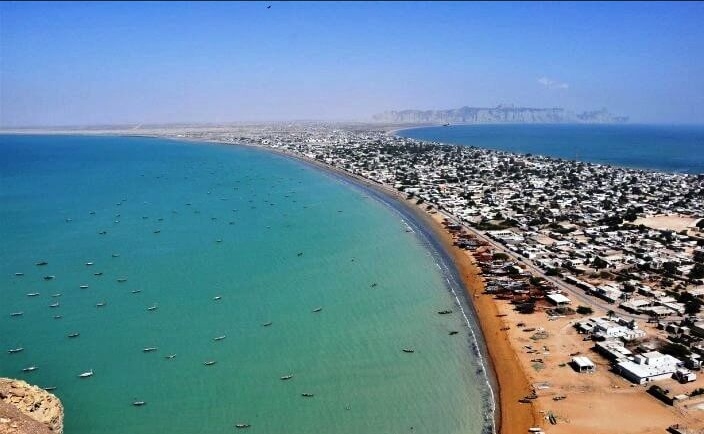
China Pakistan Economic Corridor (CPEC) presents marine outlet to the landlocked Central Asia states with access to deep sea port Gowadar in the Baluchistan province of Pakistan. CPEC is a flagship project of China’s Belt and Road Initiative (BRI) that was inaugurated in 2015. With over US$ 60 billion investment, Gowadar port is main attraction of the project that provides shortest link to the much needed warm waters for Central Asian states.
Unemployment, weak currencies, poverty, logistic issues, insufficient manufacturing and extreme weather are the problems faced by Central Asia. In addition, CARs have very low degree of intra-region trade complementarity. But, connectivity to Gowadar port of Pakistan can address these issues besides unlocking a vista of opportunities. Let us have a look at the major exports and imports of Central Asian States:
Country Trade Items
- Kazakhstan Exports Oil & oil products, copper, steel, ore, chemicals, coal, wool and wheat etc.
- Imports Electronic machinery, mechanical appliances, transport goods, chemicals, basic metals
- Uzbekistan Exports Gold, vegetables/fruits, metals, cotton fiber, energy & petrochemicals, machinery/ equipment
- Import Industrial/electric machinery, vehicle, auto parts, iron/steel, pharmaceuticals, plastics, sugar
- Turkmenistan Exports Natural gas, oil Products, electricity, cotton/textiles, plastics, gems, resins, salt, Sulphur etc.
- Imports Machinery/equipment, chemicals, agricultural tools, pharmaceuticals, auto parts etc.
- Tajikistan Exports Aluminum, ores/slag/ash, cotton/textiles, electricity, salt/Sulphur/cement, mineral fuels etc.
- Imports Alumina, energy ,energy, natural gas, petroleum/petroleum products, capital goods, grain/flour
- Kyrgyzstan Exports Precious stones/metals, clothing, electricity, wool, fruit/nuts, dairy products, tobacco etc.
- Imports Oil & mineral fuels, iron/steel, industrial machinery, auto parts, pharmaceuticals, plastics
Gowadar port of Pakistan would do away with the landlockedness of Central Asia and would enable the CARs to look beyond immediate markets. Khorgos-Gowadar Axis explained above can evolve diversification of Central Asian economies by searching competitive trading partners in South Asia, Middle East, Africa and Pacific Region. This process would explore and extend the range of products to trade on. For example, year-long supply of trout fish available in the mountain waters of Almaty and Bishkek can be exported to Pakistan in refrigerated containers. Similarly, agricultural implements of Pakistan can have good market in Central Asia. Extension of trade links is naturally accompanied by the growth of tourism.
There is no rivalry between Gowadar port and Chabahar port that is situated at a distance of 75km only. In fact, Iran itself wants to join CPEC with the purpose to outstretch its Chabahar port to Gowadar port that can handle heavy cargo ships for being a deep sea port. In sea routes around the world, deep sea ports have much more credence.
CARs have wonderful opportunity to realize their dreams of regional connectivity, economic diversification and sustainable growth by conducting marine trade through the warm waters of Gowadar port.
China Pakistan Economic Corridor (CPEC) presents marine outlet to the landlocked Central Asia states with access to deep sea port Gowadar in the Baluchistan province of Pakistan. CPEC is a flagship project of China’s Belt and Road Initiative (BRI) that was inaugurated in 2015. With over US$ 60 billion investment, Gowadar port is main attraction of the project that provides shortest link to the much needed warm waters for Central Asian states.
Unemployment, weak currencies, poverty, logistic issues, insufficient manufacturing and extreme weather are the problems faced by Central Asia. In addition, CARs have very low degree of intra-region trade complementarity. But, connectivity to Gowadar port of Pakistan can address these issues besides unlocking a vista of opportunities. Let us have a look at the major exports and imports of Central Asian States:
Country Trade Items
- Kazakhstan Exports Oil & oil products, copper, steel, ore, chemicals, coal, wool and wheat etc.
- Imports Electronic machinery, mechanical appliances, transport goods, chemicals, basic metals
- Uzbekistan Exports Gold, vegetables/fruits, metals, cotton fiber, energy & petrochemicals, machinery/ equipment
- Import Industrial/electric machinery, vehicle, auto parts, iron/steel, pharmaceuticals, plastics, sugar
- Turkmenistan Exports Natural gas, oil Products, electricity, cotton/textiles, plastics, gems, resins, salt, Sulphur etc.
- Imports Machinery/equipment, chemicals, agricultural tools, pharmaceuticals, auto parts etc.
- Tajikistan Exports Aluminum, ores/slag/ash, cotton/textiles, electricity, salt/Sulphur/cement, mineral fuels etc.
- Imports Alumina, energy ,energy, natural gas, petroleum/petroleum products, capital goods, grain/flour
- Kyrgyzstan Exports Precious stones/metals, clothing, electricity, wool, fruit/nuts, dairy products, tobacco etc.
- Imports Oil & mineral fuels, iron/steel, industrial machinery, auto parts, pharmaceuticals, plastics
Gowadar port of Pakistan would do away with the landlockedness of Central Asia and would enable the CARs to look beyond immediate markets. Khorgos-Gowadar Axis explained above can evolve diversification of Central Asian economies by searching competitive trading partners in South Asia, Middle East, Africa and Pacific Region. This process would explore and extend the range of products to trade on. For example, year-long supply of trout fish available in the mountain waters of Almaty and Bishkek can be exported to Pakistan in refrigerated containers. Similarly, agricultural implements of Pakistan can have good market in Central Asia. Extension of trade links is naturally accompanied by the growth of tourism.
There is no rivalry between Gowadar port and Chabahar port that is situated at a distance of 75km only. In fact, Iran itself wants to join CPEC with the purpose to outstretch its Chabahar port to Gowadar port that can handle heavy cargo ships for being a deep sea port. In sea routes around the world, deep sea ports have much more credence.
CARs have wonderful opportunity to realize their dreams of regional connectivity, economic diversification and sustainable growth by conducting marine trade through the warm waters of Gowadar port.